

Why Do Milium Cysts Form and How Can You Stop Them?
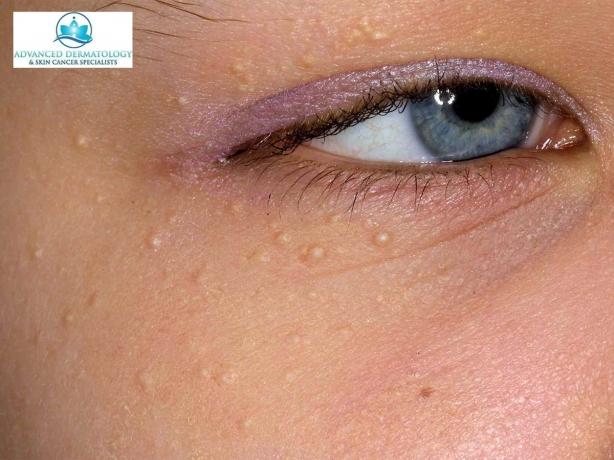
If you have noticed small white marks on your skin that are firm, painless, and cannot be squeezed... then you may be dealing with white bumps. Unlike regular acne, these bumps do not respond to conventional skincare treatments.
Such white bumps are called milium cysts, and you may have them without being aware of their presence. They usually appear on the face, especially near the eyes and on the cheeks.
That's precisely why there is this article—to tell you why milium cysts occur, what keeps them in place, and how you can finally put a stop to them. Read on, because the solutions are easier than you might think.
What Are Milium Cysts Exactly?
Imagine them as little pockets under your skin... packed with keratin—the very same protein which exists in your hair and nails. Unlike pimples, they don't pop or ooze.
What happens instead is that you get hard white bumps that look almost stuck. They tend to crop up on your face, around your eyes and cheeks, and leave you wondering how your skin could have gone out of whack.
Why Do They Even Appear?
Your skin is always shedding dead cells... but sometimes the process is disrupted. Dead cells clog up, and this blockage creates a seal that traps keratin inside. This can occur due to a variety of reasons:
- Overuse of heavy or oily skincare products
- Sun damage that causes the skin to thicken
- Previous skin injury, such as blisters or burns
- Even ordinary aging can reduce your skin's ability to regenerate itself.
And sometimes, milia simply show up seemingly out of nowhere—on flawlessly good skin.
Interestingly, people dealing with internal health issues may also notice changes in their skin. For instance, someone going through an oral thrush diagnosis might experience shifts in skin texture, which can contribute to dead skin not shedding correctly.
How to Get Rid of Milia That's Already There?
If the cysts have been present for some time, home treatment may not suffice. This is when treatments by a doctor or professional esthetician can intervene:
- Derma-rolling or hand extraction by a dermatologist (fast, but has to be done sterilely)
- Topical retinoids that encourage your skin to shed dead skin cells more quickly
- Light chemical peels to rejuvenate the skin surface
- Laser or microdermabrasion for resistant cases
Whatever you do, don't attempt to pop them at home. That will damage, infect, or scar, particularly if the cyst is deep.
When Expert Care is Necessary
Other times, home treatment simply can't get the job done. Sterile methods of removal to prevent scarring can be done by dermatologists. Chemical peels or laser resurfacing treatments can also lessen their return.
If there is persistent marking after they're removed, scar removal treatment can smooth out the skin and have you looking clear again. Professional treatment is usually the fastest way to take care of persistent cysts without harm.
How Other Health Issues Connect?
Skin doesn't act alone—it reflects what is occurring within the body. For instance, if there are fungal infections or oral issues involved, your healing cycle of the skin becomes compromised.
That is why testing, like a diagnosis of oral thrush, can reveal something when skin issues continue to recur. Treating the inside as well as the outside puts you in a better position to prevent cysts from recurring.
What Habits Weaken Your Skin's Defense?
Your daily habits either exacerbate or nourish the issue. Drinking water, proper sleep, and protecting skin from direct sunlight support natural repair. Not wearing heavy, pore-clogging makeup at night stops keratin from getting stuck under the skin.
It is consistency here that matters—the day-to-day choices make a long-term impact on your skin's resistance.
Final Thought
The story of those tiny bumps is less mysterious than it feels. They form because keratin is trapped under the skin's surface, coupled with an inability of the skin to shed naturally and the retention of milia cysts.
With the right combination of proper treatment, good hygiene, and prevention, milium cyst triggers can be fully addressed. With patience, milia cysts as well as scar-free and healthy skin can be achieved if proper care is given to the skin.